Exam Review
- What is the dosage on the drug label below?
A 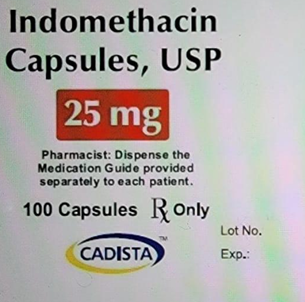 A)100 mgB)125 mgC)25 mgD)75 mg
 - A 10-year-old child with ADHD has been prescribed a stimulant medication. The parent reports that the child has been eating less since starting the medication. What is the most appropriate nursing intervention to address this side effect?A)Advise the parent to discontinue the medication immediately.B)Encourage the parent to eliminate all snacks between meals to promote hunger at mealtimes.C)Encourage the parent to increase the child's physical activity to stimulate appetite.D)Encourage the parent to make breakfast the most important meal of the day before administering the medication.
- A nurse is providing discharge education to a patient with a new prescription for Baclofen. Which of the following instructions should the nurse include?A)"Avoid alcohol while taking this medication as it may increase drowsiness."B)"You can abruptly stop taking this medication if you don't notice improvement."C)"Baclofen doesn't cause drowsiness, so you can continue your normal activities without any restrictions."D)"Take this medication only when you experience muscle spasms:"
- A patient is being started on new blood pressure medication. Which of the following instructions should the nurse provide to the patient? (Select All that Apply.)(SATA)A)Stop taking the medication if you experience any side effectsB)Make lifestyle changes such as maintaining a healthy diet and exercising regularlyC)Monitor your blood pressure and heart rate regularly and keep a log of the readingsD)Change positions slowly to reduce the risk of dizziness and fallsE)It's okay to skip doses occasionally if you feel your blood pressure is under control
Page 1 of 21
Exam Review
- A nurse is providing teaching to a client who has a new prescription for Lisinopril. Which of following statements by the client indicates an understanding of the teaching?A)"I should report a persistent cough to my provider."B)"I should take this medication as needed."C)"I should expect to have facial swelling when taking this medication."D)"I should increase my intake of potassium-rich foods."
- 0.5 mg =____mcg (Fill in the blank with the numerical value only)
- A 65-year-old male with coronary artery disease is prescribed Nitroglycerin. During discharge teaching, the nurse should emphasize that the patient must avoid taking phosphodiesterase type 5 (PDE-5) inhibitors, like Sildenafil (Viagra). What is the primary reason for this contraindication?A)Increased risk of arrhythmias due to drug interactions.B)Potential for life-threatening hypotension due to excessive vasodilation.C)Increased risk of severe headache due to overlapping side effects.D)Decreased effectiveness of nitroglycerin in relieving angina.
- A patient is prescribed Cholestyramine to lower their cholesterol levels. Which of the following instructions should the nurse provide to the patient regarding the timing of taking this medication?A)Take Cholestyramine with other medications to improve absorptionB)Take the powder for oral suspension in dry formC)Take after mealsD)Take other medications at least 1 hour before or 4 hours after taking Cholestyramine
Page 2 of 21
Exam Review
- Order: Perphenazine 8 mg PO STAT Available: Refer to the med label below How many tablets will you administer? (Insert the numerical value only)
- A nurse is reviewing pharmacokinetic principles. Which of the following factors most significantly affects the distribution of drugs in the body?A)The Cytochrome P-450 Enzyme SystemB)Renal functionC)Gastric pHD)Blood flow
- A nurse is preparing to administer a triptan medication to a patient experiencing an acute migraine. Which of the following statements about triptan administration is correct?A)Triptans should be administered only after other pain medications have been tried.B)Triptans should be administered at the onset of aura symptoms.C)Triptans are most effective when taken early in the migraine attack, at the onset of pain.D)Triptans can be safely administered every hour until pain relief is achieved.
- A nurse caring for a client who has hypertension and asks the nurse about a prescription for Propranolol. The nurse should inform the client that this medication is contraindicated in clients who have a history of which of the following conditions?A)DepressionB)GlaucomaC)MigrainesD)Asthma
Page 3 of 21
Exam Review
- A nurse is caring for a client who has deep vein thrombosis and has been on Heparin continuous infusion for 5 days. The provider prescribes Warfarin PO without discontinuing the Heparin. The client asks the nurse why both anticoagulants are necessary. Which of the following statements should the nurse make?A)"The IV heparin increases the effects of the warfarin and decreases the length of your hospital stay."B)"Both heparin and warfarin work together to dissolve the clots."C)"Warfarin takes several days to work, so the IV heparin will be used until the warfarin reaches a therapeutic level."D)"I will call the provider to get a prescription for discontinuing the IV heparin today."
- 0.04 g =____mg (Fill in the blank with the numerical value only)
- 75 mcg=____mg (Fill in the blank with the numerical value only)
- A nurse is preparing to administer 0.9% NaCl 750 mL IV to infuse over 4 hours. The drop factor of the manual IV tubing is 10 gtt/mL. What is the flow rate in gtt/min? (Round to the nearest whole number & fill in the blank with the numerical value only).
Page 4 of 21
Exam Review
- A patient with gout has been prescribed Allopurinol. Which of the following instructions should the nurse emphasize to the patient?A)"Increase your fluid intake to 2-3 liters per day."B)"Discontinue the medication once symptoms improve."C)"Double the dose if a dose is missed."D)"Take the medication only during acute gout attacks."
- A nurse is caring for a client who has congestive heart failure and is taking Digoxin daily. The client refused breakfast and is complaining of nausea, weakness, and visual disturbances. Which of the following actions should the nurse take first?A)Request an order for an antiemetic.B)Check the client's vital signs.C)Suggest that the client rests before eating the meal.D)Request a dietitian consult.
- 4.5 cups =____ounces (Fill in the blank with the numerical value only)
- A nurse is preparing to administer 0.45% NaCl 250 mL IV to infuse over 90 minutes. The drop factor of the manual IV tubing is 15 gtt/mL. What is the flow rate in gtt/min? (Round to the nearest whole number & fill in the blank with the numerical value only)
Page 5 of 21
Exam Review
- A nurse is reviewing the medication regimen of a 65-year-old patient with multiple comorbidities. The patient's current medications include: Metoprolol 50 mg PO BID for Hypertension Triazolam 0.25 mg PO at Bedtime for Insomnia Sertraline 50 mg PO q24hr for Depression Oxycodone 5 mg PO q6hr PRN for Pain Which of the following statements about this medication regimen are correct? (Select All that Apply.)(SATA)A)Beta-blockers like metoprolol can mask the signs of hypoglycemiaB)It is safe to take additional doses of Sertraline if the patient feels like their symptoms are worseningC)The patient should be monitored for orthostatic hypotensionD)Oxycodone can be used long-term without risk of physical dependenceE)The combination of triazolam and oxycodone increases the risk of respiratory depression
- Which of the following statements about drug metabolism in pharmacokinetics is correct?A)Drugs with strong first-pass metabolism are best administered via an enteral routeB)Metabolism alters medications so that they can be excreted from the bodyC)The first-pass effect increases the bioavailability of orally administered drugsD)Metabolism primarily occurs in the kidneys
- Analyze the following clinical manifestations and determine whether they are characteristic of Anticholinergic or Cholinergic Toxicity.
Anticholinergic Toxicity Cholinergic Toxicity Hypertension ✓ Urinary Retention ✓ Diaphoresis ✓ Bronchoconstriction ✓ Salivation ✓ Hyperthermia ✓ - 16 ounces =___Enter text here.mL (Fill in the blank with the numerical value only)
Page 6 of 21